What Is Adrenal Gland Cancer?
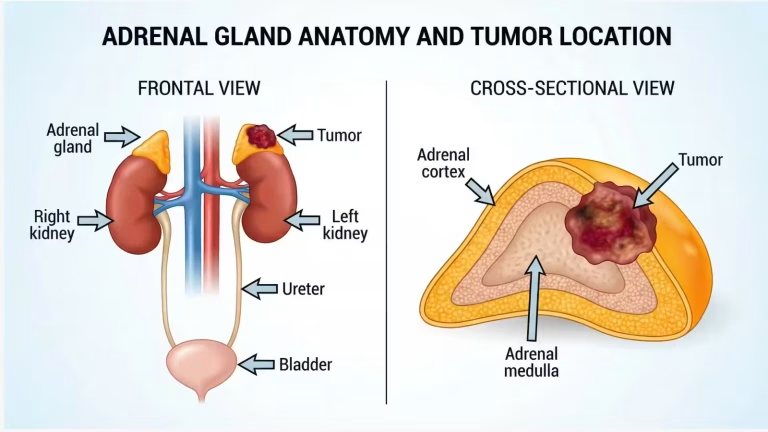
Adrenal gland cancer is a rare disease in which malignant (cancerous) cells form in the tissues of the adrenal glands—small, triangular-shaped glands located on top of each kidney. These glands are an important part of the endocrine system and produce hormones that regulate vital functions such as metabolism, blood pressure, the immune system, and the body’s response to stress.
Although most tumors that develop in the adrenal glands are benign (noncancerous), some are malignant and can spread to other parts of the body. Early diagnosis and treatment are critical for a better prognosis.
Types of Adrenal Gland Cancer
Adrenal cancers are classified according to which part of the gland they originate from. The adrenal gland has two main parts: the outer layer (cortex) and the inner part (medulla).
| Cancer Type | Origin | Description |
|---|---|---|
| Adrenocortical Carcinoma (ACC) | Adrenal Cortex | The most common type of adrenal cancer in adults. It arises from the outer layer of the gland and produces steroid hormones such as cortisol and aldosterone. These tumors are often functional, meaning they produce excess hormones. |
| Pheochromocytoma | Adrenal Medulla | This tumor arises from the inner part of the gland, which produces the “fight-or-flight” hormones adrenaline and noradrenaline. Although most pheochromocytomas are benign, about 10–15% are malignant. |
| Neuroblastoma | Adrenal Medulla | The most common adrenal cancer of childhood, typically developing in infants and young children. It originates from immature nerve cells in the adrenal medulla. |
Symptoms and Risk Factors
Symptoms of adrenal cancer can vary widely. Some tumors are “functional,” meaning they produce excess hormones and cause noticeable symptoms. “Nonfunctional” tumors may not cause symptoms until they grow large enough to press on nearby organs.
Symptoms Due to Excess Hormone Production:
- Cortisol: Weight gain (especially in the face and abdomen), muscle weakness, high blood pressure, high blood sugar, and purple stretch marks on the skin (Cushing syndrome).
- Aldosterone: High blood pressure, low potassium levels, muscle cramps, and frequent urination.
- Androgens/Estrogens: Excess facial/body hair and menstrual irregularities in women; breast enlargement or testicular shrinkage in men.
- Adrenaline (from pheochromocytoma): High blood pressure, palpitations, sweating, headaches, and panic attacks.
Symptoms Due to Tumor Growth:
- Abdominal or back pain
- A feeling of fullness in the abdomen
- Unexplained weight loss
Although the exact cause of most adrenal cancers is unknown, certain genetic syndromes—such as Li-Fraumeni syndrome, Beckwith–Wiedemann syndrome, and Multiple Endocrine Neoplasia (MEN) syndromes—are known to increase risk.
Diagnosis and Staging
Diagnosis of adrenal cancer involves a series of tests:
- Blood and urine tests: Performed to measure abnormalities in hormone levels.
- Imaging tests: CT scans, MRI, or PET scans are used to locate the tumor, determine its size, and assess whether it has spread to other parts of the body.
- Biopsy: In some cases, a small tissue sample may be taken for examination; however, biopsy is not always recommended due to the risk of excessive hormone release from the tumor.
After diagnosis, staging is performed to determine how far the cancer has spread:
- Stage I: The tumor is small (≤5 cm) and confined to the adrenal gland.
- Stage II: The tumor is larger (>5 cm) but still confined to the adrenal gland.
- Stage III: The tumor has spread to nearby tissues or lymph nodes.
- Stage IV: The cancer has metastasized to distant organs such as the liver, lungs, or bones.
Treatment Options
Treatment of adrenal cancer depends on the type and stage of the cancer, as well as the patient’s overall health.
- Surgery (Adrenalectomy): The primary and most effective treatment, especially for localized cancers. The goal is to remove the entire adrenal gland and, if necessary, nearby lymph nodes or affected tissues.
- Chemotherapy and adrenolytic drugs: Medications are used to kill cancer cells. Mitotane is a drug specifically used to treat adrenocortical carcinoma and is often given after surgery to reduce the risk of recurrence or for advanced-stage disease.
- Radiation therapy: Uses high-energy rays to target and destroy cancer cells. It may be used after surgery or to relieve symptoms caused by metastatic disease.
- Hormone-controlling medications: Drugs may be used to block the production or effects of excess hormones produced by functional tumors, helping to manage symptoms.
For detailed information about examination processes, treatment options, and appointment requests, you can contact us via the Contact page.