What Is Kidney Cancer?
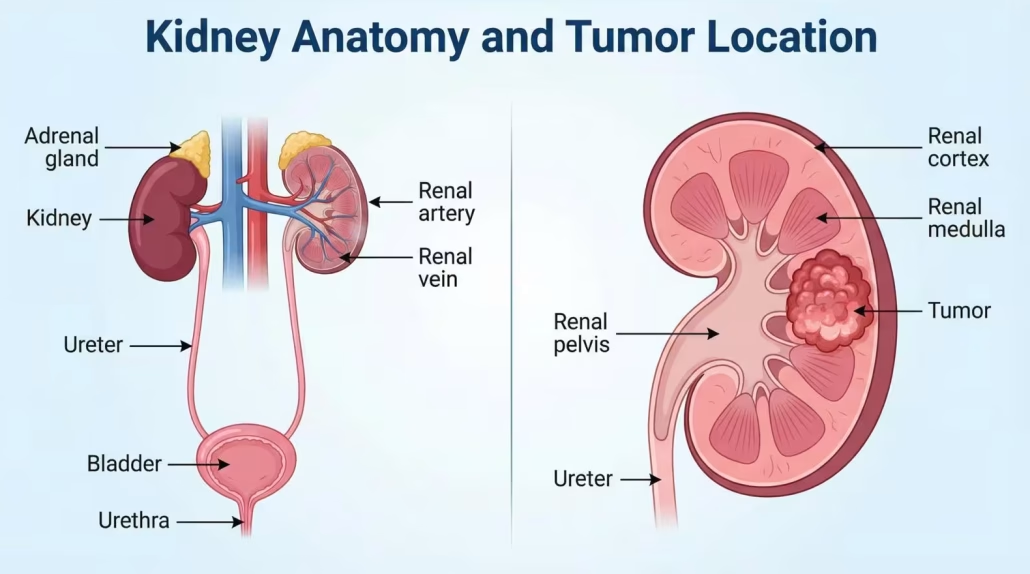
Kidney cancer, also known as renal cancer, is a disease that begins in the kidneys—one of the two bean-shaped organs located on either side of your spine. Your kidneys are responsible for filtering waste products from the blood and producing urine. The disease starts when healthy cells in one or both kidneys grow uncontrollably and form a mass called a tumor.
Most kidney cancers are discovered incidentally at an early stage, often during imaging tests performed for other medical conditions. Early detection significantly improves prognosis, as treatments are most effective before the cancer spreads.
Types of Kidney Cancer
There are several types of kidney cancer, the most common being Renal Cell Carcinoma (RCC), which accounts for approximately 85–90% of all cases. RCC arises from the tissue of the kidney’s small tubes (tubules). Understanding the specific type and subtype is crucial for treatment planning.
| Type of Kidney Cancer | Description |
|---|---|
| Renal Cell Carcinoma (RCC) | The most common form in adults. Subtypes include Clear Cell (the most common), Papillary, and Chromophobe RCC. |
| Transitional Cell Carcinoma | Also known as Urothelial Carcinoma, this type begins in the renal pelvis where the kidney meets the ureter. It accounts for about 6–7% of cases and behaves more like bladder cancer. |
| Wilms Tumor | The most common type of kidney cancer in children, but very rare in adults. |
| Renal Sarcoma | A very rare type (about 1% of cases) that begins in the connective tissues of the kidney. |
Symptoms and Risk Factors
In its early stages, kidney cancer often does not cause noticeable symptoms. As the tumor grows, it may cause:
- Blood in the urine (hematuria); the urine may appear pink, red, or cola-colored
- Persistent pain in the back or side that does not go away
- A lump or swelling in the side or back
- Loss of appetite and unexplained weight loss
- Persistent fever not related to infection
- Extreme fatigue
Several factors can increase the risk of developing kidney cancer:
- Smoking: Smokers have a significantly higher risk than non-smokers.
- Obesity: Excess body weight can lead to hormonal changes that increase risk.
- High blood pressure (hypertension): A proven risk factor.
- Family history and genetics: Having a close relative with kidney cancer or certain genetic conditions (such as von Hippel–Lindau disease) increases risk.
- Long-term dialysis: Patients receiving long-term dialysis are at higher risk.
Diagnosis and Staging
If kidney cancer is suspected, your doctor may use several tests to make the diagnosis:
- Imaging tests: CT scans, MRI, or ultrasound are used to create detailed images of the kidneys and identify tumors.
- Blood and urine tests: These tests can help detect signs of cancer, such as anemia or abnormal kidney function.
- Biopsy: A small tissue sample is taken from the kidney tumor and examined under a microscope to confirm the diagnosis.
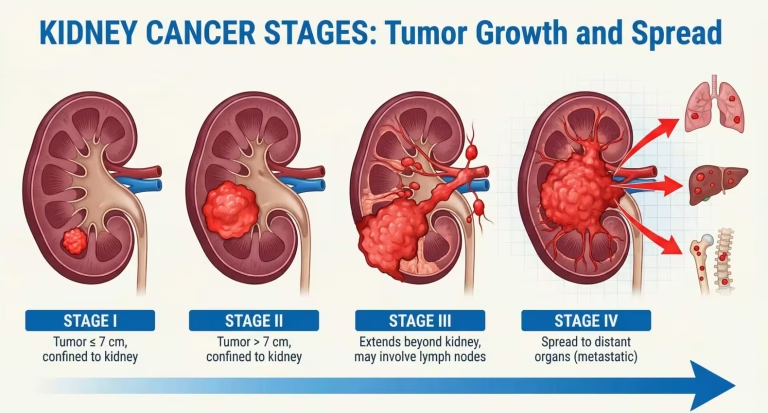
Once diagnosed, the cancer is assigned a stage ranging from Stage I to Stage IV. Staging describes the size of the tumor and whether it has spread, which is essential for determining the most appropriate treatment.
Treatment Options
Treatment for kidney cancer depends on the stage and type of cancer, as well as the patient’s overall health. The main treatment options include:
- Surgery: The most common treatment for early-stage (localized) kidney cancer. This may involve removal of part of the kidney (partial nephrectomy) or the entire kidney (radical nephrectomy).
- Ablation: For small tumors, techniques such as cryoablation (freezing) or radiofrequency ablation (heating) can destroy cancer cells without surgery. These may be used in patients who are not suitable candidates for surgery.
- Targeted therapies: These drugs block specific pathways that cancer cells use to grow and survive. They are a primary treatment for advanced (metastatic) kidney cancer.
- Immunotherapy: This treatment strengthens the body’s own immune system to find and destroy cancer cells. It has become a cornerstone of advanced (metastatic) kidney cancer treatment and may be used alone or in combination with targeted therapies. Immunotherapy is also used in high-risk early-stage patients to help prevent disease recurrence.
- Radiation therapy: Although not a primary treatment for kidney cancer, it may be used to relieve symptoms or to treat cancer that has spread to other areas, such as the bones.
For detailed information about examination processes, treatment options, and appointment requests, you can contact us via the Contact page.