What is Prostate Cancer?
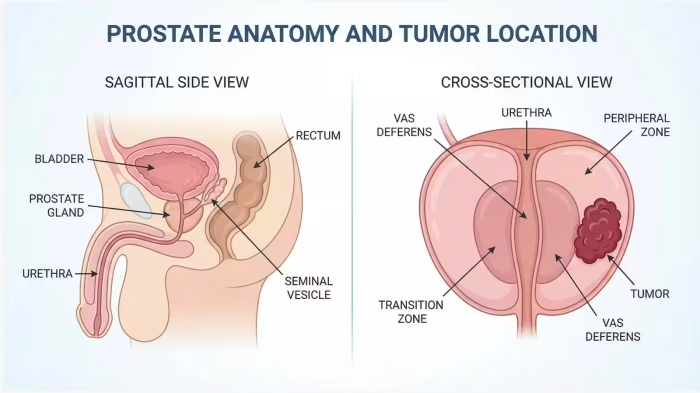
Prostate cancer is a type of cancer that develops in the prostate, a small walnut-sized gland in men that produces seminal fluid, which nourishes and transports sperm. It is one of the most common cancers among men. Most prostate cancers grow slowly and remain confined to the prostate gland, in which case they may not cause serious harm. However, while some types of prostate cancer grow slowly and require minimal treatment, others are aggressive and can spread rapidly.
Early detection is vital because diagnosing prostate cancer at an early stage—before it spreads beyond the prostate—significantly increases the chances of successful treatment.
Symptoms and Risk Factors
prostate cancer may cause the following symptoms:
- Difficulty urinating or a weak urine stream
- Frequent urination, especially at night
- Blood in the urine or semen
- Pain or burning during urination
- Erectile dysfunction
- Pain in the back, hips, or pelvic area
Several factors can increase a man’s risk of developing prostate cancer:
| Risk Factor | Description |
|---|---|
| Age | The risk of prostate cancer increases with age. It is most commonly seen after age 50, and approximately 60% of cases are diagnosed in men over 65. |
| Race | For reasons not yet fully understood, Black men have a higher risk of developing prostate cancer compared with men of other races. |
| Family History | If a close relative (father, brother, or son) has been diagnosed with prostate cancer, the risk more than doubles. |
| Obesity | Obese men may have a higher risk of developing more aggressive prostate cancer. |
| Genetics | Inherited mutations in the BRCA1 or BRCA2 genes, which are also linked to breast cancer, may increase the risk of prostate cancer. |
Diagnosis and Staging
Screening and diagnosis of prostate cancer involve several steps:
- Prostate-Specific Antigen (PSA) Test: A blood test that measures the level of PSA, a substance produced by the prostate. Elevated levels may indicate cancer.
- Digital Rectal Examination (DRE): A doctor inserts a finger into the rectum to check the prostate for lumps or hard areas.
- Imaging: MRI or transrectal ultrasound can produce detailed images of the prostate gland. Bone scintigraphy is used to assess the presence of metastases in the bones, which are the most common site of spread for prostate cancer. With its increasing use today, PSMA PET/CT may be more sensitive in evaluating local or distant tumors, even at low PSA levels.
- Biopsy: If initial tests are abnormal, a biopsy is performed to analyze tissue samples. This is the only definitive way to diagnose prostate cancer.
After diagnosis, the cancer is staged (from Stage I to Stage IV) and graded using the Gleason score. The Gleason score indicates how aggressive the cancer is, while staging describes the size of the cancer and how far it has spread.
Treatment Options
Treatment for prostate cancer depends on several factors, including how quickly the cancer is growing, whether it has spread, and the patient’s overall health.
- Active Surveillance: For slow-growing, early-stage cancers, doctors may recommend close monitoring with regular PSA tests, DREs, and biopsies instead of immediate treatment.
- Surgery: Radical prostatectomy involves removal of the prostate gland. This can be performed as open surgery or using a minimally invasive robotic-assisted approach.
- Radiation Therapy: Uses high-energy rays to kill cancer cells. It may be delivered externally (external beam radiation) or internally (brachytherapy).
- Hormone Therapy: Prostate cancer cells need male hormones (androgens), such as testosterone, to grow. Hormone therapy blocks the production or action of these hormones.
- Chemotherapy: Used for advanced prostate cancer that has spread to other parts of the body and no longer responds to hormone therapy.
- Nuclear Therapies (Targeted Radioligand Therapy): In advanced cases where hormone suppression therapies and chemotherapy are ineffective, nuclear therapies that bind to specific targets on prostate cancer cells may be used.
For detailed information about examination processes, treatment options, and appointment requests, you can contact us via the Contact page.