What Is Ovarian Cancer?
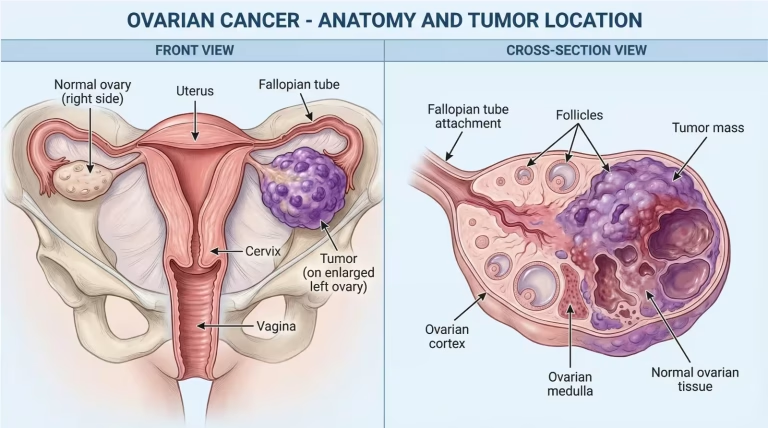
Ovarian cancer is a disease in which malignant (cancerous) cells form in the tissues of one or both ovaries. The ovaries are two female reproductive glands located on each side of the uterus, and they are responsible for producing eggs (ova) as well as the hormones estrogen and progesterone. Although it is often diagnosed in later stages, making treatment more challenging, advancements in therapy are continuously improving outcomes.
Ovarian cancer often has vague symptoms in its early stages, which can be mistaken for more common, less serious conditions. This is why it is often called a “silent” disease. Awareness of the risk factors and subtle symptoms is crucial for earlier detection.
Types of Ovarian Cancer
More than 90% of ovarian cancers are epithelial tumors, which arise from the surface (epithelium) of the ovary. The other, rarer types are germ cell tumors and stromal tumors.
| Tumor Type | Description | Prevalence |
|---|---|---|
| Epithelial Tumors | These tumors arise from the cells on the outer surface of the ovary. This is the most common type of ovarian cancer, with several subtypes such as serous, mucinous, and endometrioid carcinomas. | ~90% |
| Germ Cell Tumors | These tumors develop from the cells that produce the eggs (ova). They are rare and tend to occur in younger women and teenagers. | <5% |
| Stromal Tumors | These rare tumors grow in the hormone-producing connective tissue cells that support the ovary. They are often diagnosed at an earlier stage than epithelial tumors. | ~1% |
Doktorlar ayrıca mesane kanserini, mesanenin kas duvarını istila edip etmediğine göre de sınıflandırır:
- Kasa invaze olmayan mesane kanseri (NMIBC): Kanser, iç hücre tabakasıyla sınırlıdır ve daha derindeki kas tabakasına büyümemiştir. Bu daha erken bir evredir.
- Kasa invaze mesane kanseri (MIBC): Kanser, mesane duvarının derin kaslarına doğru büyümüştür ve vücudun diğer bölgelerine yayılma olasılığı daha yüksektir.
Symptoms and Risk Factors
The most common symptoms of ovarian cancer are often vague and can be attributed to other conditions. These may include:
- Abdominal bloating or swelling
- Quickly feeling full when eating
- Discomfort in the pelvic area
- Changes in bowel habits, such as constipation
- A frequent need to urinate
- Fatigue or persistent lack of energy
- Back pain
The main risk factors for developing ovarian cancer include:
- Older age: The risk increases with age, with most cases occurring in women over 63.
- Inherited gene mutations: Mutations in genes such as BRCA1 and BRCA2, or those associated with Lynch syndrome, significantly increase the risk.
- Family history: Having a close relative (mother, sister, or daughter) with ovarian, breast, or colorectal cancer increases the risk.
- Personal history of certain cancers: A previous diagnosis of breast, uterine, or colorectal cancer can increase the risk.
- Postmenopausal hormone replacement therapy: Using estrogen alone or with progesterone after menopause can increase risk.
- Never having been pregnant: Women who have never carried a pregnancy to term have a higher risk.
- Endometriosis: This condition, where uterine lining tissue grows outside the uterus, is linked to a higher risk.
Diagnosis and Staging
If symptoms suggest ovarian cancer, a doctor will perform a physical examination and may order further tests:
- Pelvic exam: To feel the ovaries and other pelvic organs for any lumps or abnormalities.
- Imaging tests: A transvaginal ultrasound is the primary imaging test used to get a clear picture of the ovaries. CT scans of the abdomen and pelvis may also be used to see if the cancer has spread.
- Blood tests for tumor markers: A blood test to measure levels of a protein called CA-125 is often used. Elevated levels can be a sign of ovarian cancer, but other conditions can also cause high levels.
- Surgery: The only way to definitively diagnose ovarian cancer is through a surgical procedure. A surgeon removes the tumor, and a pathologist examines the tissue for cancer cells. This is often done at the same time as staging and initial treatment.
After diagnosis, staging is performed to determine how far the cancer has spread:
- Stage I: Cancer is confined to one or both ovaries.
- Stage II: Cancer has spread to other tissues in the pelvis.
- Stage III: Cancer has spread to the abdomen (retroperitoneal lymph nodes or the lining of the abdomen).
- Stage IV: Cancer has spread beyond the abdomen to other parts of the body, such as the lungs or liver.
Treatment Options
Treatment depends on the type and stage of the cancer, as well as the patient’s overall health and preferences.
- Surgery: This is the main treatment for most ovarian cancers. The goal is to remove as much of the tumor as possible (a procedure called debulking). Depending on the stage and the patient’s desire for future pregnancies, the surgery may involve removing one or both ovaries, the fallopian tubes, the uterus, and nearby lymph nodes.
- Chemotherapy: Powerful drugs are used to kill cancer cells, typically after surgery, to eliminate any remaining cancer. It can also be used before surgery to shrink tumors. Chemotherapy is often administered intravenously (IV) but can sometimes be delivered directly into the abdominal cavity (intraperitoneal chemotherapy).
- Targeted Therapy: These drugs target specific vulnerabilities in cancer cells. For example, PARP inhibitors are a class of targeted drugs effective against cancers with BRCA
- Hormone Therapy: For certain types of slow-growing ovarian tumors, hormone therapy may be used to block hormones that help cancer cells grow.
- Immunotherapy: This treatment helps the body’s own immune system to recognize and fight cancer cells.
Before starting treatment, women who wish to have children in the future are advised to discuss fertility-sparing options with their doctor, as some treatments can affect fertility. In some early-stage cases, it may be possible to preserve the uterus and one ovary.