What Is Testicular Cancer?
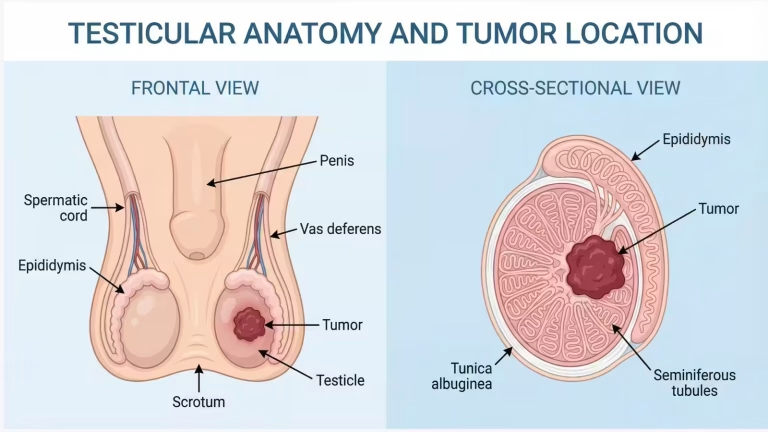
Testicular cancer is a disease in which malignant (cancerous) cells form in the tissues of one or both testicles. The testicles are two male reproductive glands located inside a pouch of skin called the scrotum, and they are responsible for producing sperm and testosterone. Although it is relatively less common compared to other cancers, it is the most frequently diagnosed cancer in men between the ages of 15 and 35.
Fortunately, testicular cancer is highly treatable and, especially when detected early, has one of the highest cure rates among all cancers. Regular testicular self-examination is key to early detection.
Types of Testicular Cancer
More than 90% of testicular cancers develop from germ cells, which are the cells that produce sperm. There are two main types of germ cell tumors:
| Tumor Type | Description | Prevalence |
|---|---|---|
| Seminomas | These tumors tend to grow and spread more slowly than non-seminomas. They are very sensitive to radiation therapy and chemotherapy. They are usually seen in men from their late 20s to early 40s. | 40–50% |
| Non-seminomas | These tumors tend to grow more rapidly and are more common in men from their late teens to early 30s. There are four main subtypes: embryonal carcinoma, yolk sac carcinoma, choriocarcinoma, and teratoma. | 50–60% |
Symptoms and Risk Factors
The most common symptom of testicular cancer is a painless lump or swelling in one or both testicles. Other symptoms may include:
- A feeling of heaviness in the scrotum
- A dull ache in the lower abdomen or groin
- Sudden accumulation of fluid in the scrotum
- Pain or discomfort in a testicle or the scrotum
- Breast enlargement or tenderness (gynecomastia) due to hormonal changes
The main risk factors for developing testicular cancer include:
- Undescended testicle (cryptorchidism): Men whose testicle did not descend into the scrotum before birth have a significantly higher risk.
- Family history: Having a close relative (father or brother) with testicular cancer increases the risk.
- Personal history: About 3–4% of men who have had cancer in one testicle will develop cancer in the other testicle.
- Age: Most commonly affects young men, particularly between the ages of 15 and 35.
- Race: White men are approximately 4 to 5 times more likely to develop testicular cancer than Black or Asian-American men.
Diagnosis and Staging
If a lump or other symptom is detected, a doctor will perform a physical examination and likely order further tests:
- Scrotal ultrasound: The primary imaging test used to determine whether a mass is solid (and therefore more likely to be cancerous) or fluid-filled.
- Blood tests for tumor markers: Blood levels of proteins such as alpha-fetoprotein (AFP), human chorionic gonadotropin (hCG), and lactate dehydrogenase (LDH) are measured. These markers can help diagnose and stage the cancer.
- Radical inguinal orchiectomy: If cancer is suspected, the entire testicle is surgically removed through an incision in the groin. This procedure is used for both diagnosis (by examining the tissue) and treatment.
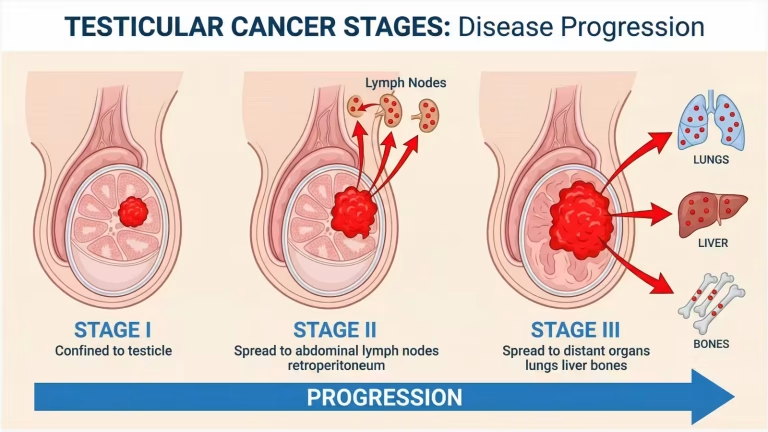
After diagnosis, staging is performed to determine whether the cancer has spread:
- Stage I: Cancer is confined to the testicle.
- Stage II: Cancer has spread to lymph nodes in the abdomen (retroperitoneal lymph nodes).
- Stage III: Cancer has spread beyond the abdominal lymph nodes to other parts of the body, such as the lungs or liver.
Treatment Options
Treatment depends on the type and stage of the cancer.
- Surgery: The primary treatment for nearly all stages and types of testicular cancer is surgical removal of the affected testicle (radical inguinal orchiectomy). In some cases, nearby lymph nodes may also be removed.
- Chemotherapy: Especially if the cancer has spread, powerful drugs are used after surgery to kill cancer cells.
- Radiation therapy: Uses high-energy rays to destroy cancer cells and is most commonly used for seminoma-type cancers.
- Surveillance (Active monitoring): For some early-stage cancers, close follow-up with regular check-ups, blood tests, and imaging may be recommended instead of immediate additional treatment after surgery.
Before starting treatment, men who wish to have children in the future are advised to consider sperm banking, as treatment may affect fertility.
For detailed information about examination processes, treatment options, and appointment requests, you can contact us via the Contact page.