What Are Antibody-Drug Conjugates (ADCs)?
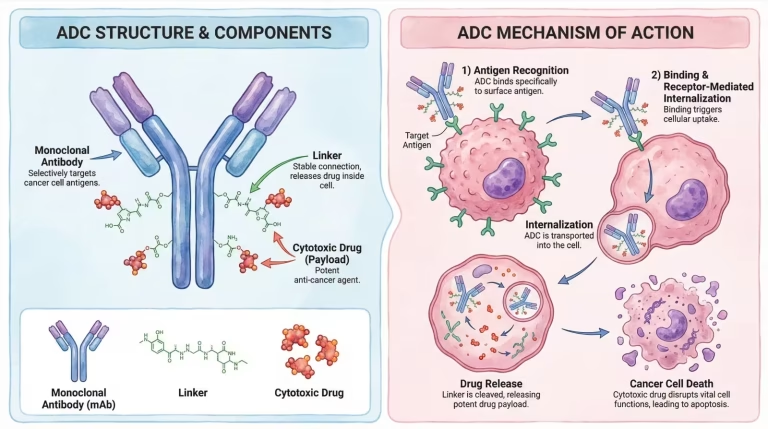
Antibody-Drug Conjugates (ADCs) are one of the most advanced forms of targeted therapy, revolutionizing cancer treatment. These “smart drugs” combine a monoclonal antibody, which has the ability to distinguish cancer cells from healthy cells, with a highly potent chemotherapy drug designed to destroy those cancer cells.
We can think of this technology as a “magic bullet” or a “Trojan horse” that doesn’t miss its target:
- Target Identification (The Antibody): The first part of the treatment, the monoclonal antibody, is specifically designed in a laboratory to recognize specific proteins (antigens) found on the surface of cancer cells, or which are present in much greater quantities compared to normal cells.
- The Destructive Payload (The Drug): A very powerful chemotherapy agent (a cytotoxic drug) is attached to the antibody via a chemical linker. This drug is often too potent to be used in standard chemotherapy because it would also harm healthy cells if administered systemically on its own.
- Targeted Delivery: When administered into the body, the antibody acts like a “guide,” navigating through the bloodstream to directly find and lock onto cancer cells.
- Cell Destruction: Once the antibody binds to the cancer cell, it is internalized by the cell. After entering, the chemical linker dissolves and releases its potent chemotherapy drug directly into the heart of the target. This allows the drug to destroy the cancer cell while causing minimal damage to the surrounding healthy tissues.
What are the Advantages of Antibody-Drug Conjugates?
The most significant advantages of this innovative approach compared to traditional chemotherapy include:
- High Efficacy: Delivering highly potent chemotherapy drugs directly inside the cancer cell increases the effectiveness of the treatment.
- Fewer Side Effects: Because the drug is largely focused on cancer cells instead of healthy cells, systemic side effects commonly seen with traditional chemotherapy—such as hair loss, nausea, and fatigue—are generally less severe.
- A New Option for Resistant Cancers: ADCs can be effective even in some types of cancer that have not responded to standard treatments or have developed resistance.
In Which Cancer Types Are They Used?
Antibody-Drug Conjugates hold promise for many types of cancer that carry a suitable target antigen. Today, they are approved and successfully used in the treatment of various cancers, including breast cancer, lymphoma, leukemia, bladder cancer, lung cancer, and gastric (stomach) cancer. As cancer research advances, the list of diseases treated with ADCs is rapidly expanding.
This treatment may not be suitable for every patient. Whether a patient can benefit from ADC therapy depends on the molecular characteristics of their tumor (i.e., whether it carries the target antigen). Therefore, genetic and pathological tests on the tumor tissue are usually required before a treatment decision is made.
For detailed information about examination processes, treatment options, and appointment requests, you can contact us via the Contact page.