What Is Bladder Cancer?
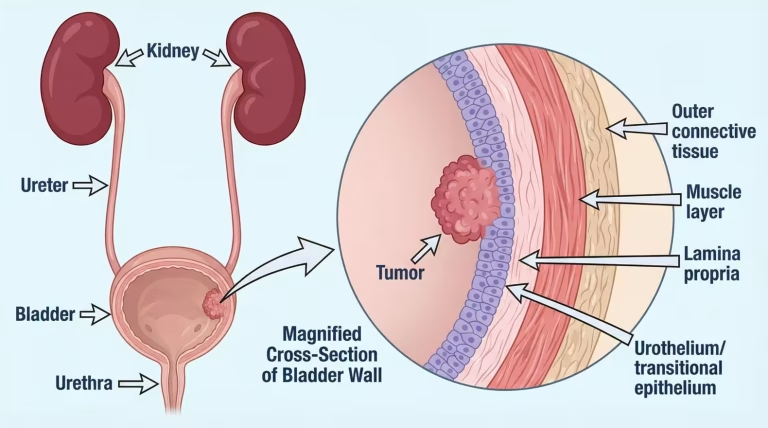
Bladder cancer is a disease that begins in the cells of the bladder, a hollow, muscular organ located in the lower abdomen that stores urine. It most commonly starts in the cells lining the inside of the bladder, known as urothelial cells. Although it can occur at any age, it most often affects older adults.
Early diagnosis is crucial because bladder cancer is highly treatable in its early stages. However, due to its high rate of recurrence, regular follow-up tests are vital even after successful treatment.
Types of Bladder Cancer
Bladder cancer is classified according to the type of cell in which the cancer begins. Understanding the cancer type is essential for determining the most appropriate treatment approach.
| Type of Bladder Cancer | Description |
|---|---|
| Urothelial Carcinoma | Also known as transitional cell carcinoma (TCC), this is the most common type, accounting for approximately 90% of cases. It begins in the urothelial cells that line the inside of the bladder. |
| Squamous Cell Carcinoma | This type accounts for about 5% of bladder cancers and is usually associated with chronic irritation or inflammation of the bladder, such as long-term catheter use or recurrent infections. |
| Adenocarcinoma | A rare type that accounts for 1–2% of cases and begins in the glandular cells of the bladder lining. |
Doctors also classify bladder cancer based on whether it has invaded the muscle wall of the bladder:
- Non–muscle-invasive bladder cancer (NMIBC): The cancer is limited to the inner cell layers and has not grown into the deeper muscle layer. This represents an earlier stage.
- Muscle-invasive bladder cancer (MIBC): The cancer has grown into the deep muscle layers of the bladder wall and has a higher likelihood of spreading to other parts of the body.
Symptoms and Risk Factors
The most common and earliest symptom of bladder cancer is blood in the urine (hematuria). This may cause the urine to appear pink, red, or cola-colored. Other symptoms may include:
- Frequent urination
- Pain or burning during urination
- Feeling an urgent need to urinate even when the bladder is not full
- Difficulty urinating or a weak urine stream
- Lower back or pelvic pain
Several factors can increase the risk of developing bladder cancer:
- Smoking: The most important risk factor, increasing the risk more than twofold.
- Age: Risk increases with age, and most cases are diagnosed in people over 55.
- Gender: Men are about four times more likely to develop bladder cancer than women.
- Chemical exposure: Certain industrial chemicals used in the dye, rubber, and leather industries are associated with bladder cancer.
- Chronic bladder problems: Recurrent urinary tract infections, kidney stones, and bladder stones may increase risk.
Diagnosis and Staging
If bladder cancer is suspected, several tests are used to confirm the diagnosis:
- Cystoscopy: A thin tube with a camera at the end is inserted into the bladder to visualize the inner lining.
- Biopsy: A small tissue sample is taken during cystoscopy and examined for cancer cells. This procedure is often referred to as TURBT (Transurethral Resection of a Bladder Tumor).
- Urine cytology: A urine sample is examined for the presence of cancer cells.
- Imaging tests: CT scans or MRI evaluations help determine whether the cancer has spread locally or to distant areas.
After diagnosis, staging is performed to determine how far the cancer has spread, which is critical for treatment planning.
Treatment Options
health. Common treatments include:
- Surgery: To remove the tumor (TURBT) or the entire bladder (cystectomy).
- Intravesical therapy: Intravesical drug therapies may be used to treat early-stage cancers.
- Chemotherapy: Used systemically (for advanced-stage cancer) or delivered directly into the bladder.
- Radiation therapy: Uses high-energy rays to destroy cancer cells.
- Immunotherapy: Strengthens the body’s own immune system to fight cancer, particularly in advanced disease.
In patients with early-stage tumors that have not spread to the muscle layer, bladder-sparing approaches are used, including cystoscopic removal of the tumor and intravesical BCG therapy when appropriate.
In patients whose cancer has invaded the muscle layer but has not spread to distant organs, treatment until a few years ago consisted solely of chemotherapy. In recent years, however, neoadjuvant (preoperative) treatment options have expanded to include combinations of chemotherapy and immunotherapy. In addition, targeted therapies known as antibody–drug conjugates, which deliver chemotherapy directly to cancer cells, combined with immunotherapy, are emerging as promising new treatment options. The main advantage of these new treatments is that they increase the likelihood of a complete response—defined as the complete disappearance of cancer tissue—thereby reducing recurrence rates and extending survival compared with chemotherapy alone.
In patients with disease that has spread to distant sites (metastatic disease), combination treatments using antibody–drug conjugates together with immunotherapy have become the standard of care in recent years, replacing chemotherapy alone. With this approach, there is approximately a 30% chance of complete tumor disappearance, and median survival times are longer than those achieved with standard chemotherapy.
For detailed information about examination processes, treatment options, and appointment requests, you can contact us via the Contact page.